Software Is Changing — And Developers Are Changing With It
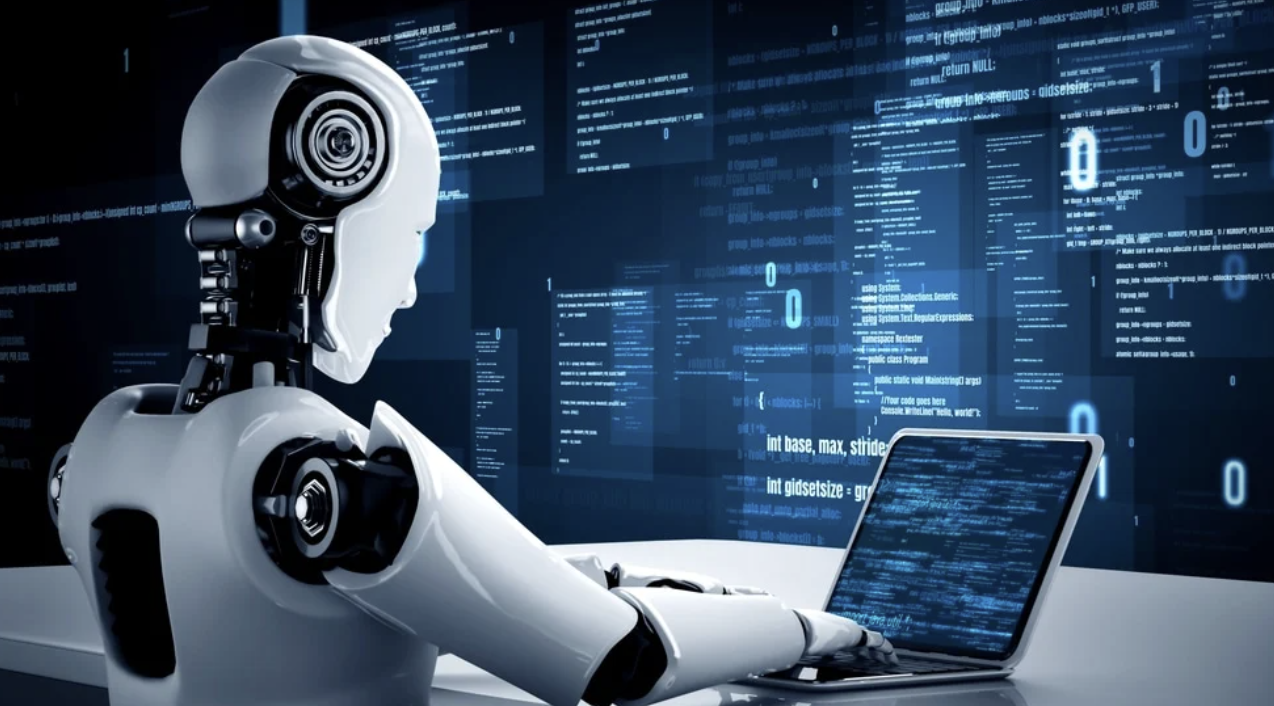
Software Is Changing — And Developers Are Changing With It
There is a recurring question whenever a new generation of AI tools becomes more capable:
Will AI replace developers?
I think this is the wrong question.
The more interesting question is:
What happens to software development when writing code becomes easier?
Because something important is happening.
The difficult part of building software is slowly moving away from typing code.
And that changes everything.
Code Was Never the Whole Job
Writing code has always been only one part of software engineering.
Before a single line is written, someone has to understand the problem.
What should the product actually do?
Who is it for?
What data does it need?
How should the system be structured?
What happens when something fails?
How should users interact with it?
How will it scale?
How will it remain secure?
AI can increasingly help with the implementation.
But implementation is only one part of the problem.
The harder problem is knowing what should be implemented in the first place.
The Developer Is Moving Up the Stack
AI coding tools are making a surprising amount of implementation work faster.
Generating components.
Writing functions.
Creating APIs.
Explaining unfamiliar code.
Finding bugs.
Writing tests.
Refactoring.
These capabilities are valuable.
But they also create a new responsibility.
If machines can produce code faster, developers need to become better at deciding which code should exist.
The developer increasingly becomes an architect, product thinker and system designer.
The value shifts upward.
From:
Writing code
toward:
Designing systems.
Software Becomes More Accessible
This change is not limited to professional developers.
Someone with a strong idea but limited programming experience can now build something that previously required a team.
That is a significant shift.
The distance between:
idea → prototype
is becoming dramatically shorter.
This could create millions of experiments.
Most of them will fail.
But that is not necessarily a problem.
When the cost of experimentation decreases, more ideas get a chance to exist.
Some will become products.
Some will become businesses.
Some will simply teach their creators something.
The important thing is that the barrier to building software is falling.
But There Is a Trap
Making software easier to build does not automatically make software better.
This may become one of the biggest problems of the AI era.
If everyone can generate an application in an afternoon, the internet could become filled with software that looks impressive but solves nothing particularly well.
More code does not mean more value.
More features do not mean a better product.
And an AI-generated application is not automatically a well-engineered application.
The fundamentals still matter.
Architecture.
Security.
Performance.
Accessibility.
User experience.
Reliability.
Maintenance.
AI can accelerate development.
It cannot remove the need for judgment.
The New Advantage
If implementation becomes cheaper, what becomes valuable?
I believe several things become more important.
Taste
Knowing what should be built and what should not.
Product Thinking
Understanding the actual problem rather than simply responding to a prompt.
Technical Judgment
Knowing when an AI-generated solution is good enough — and when it is dangerously wrong.
Distribution
A great product still needs users.
Domain Knowledge
Understanding a specific industry can become a major advantage when the technical barrier decreases.
Curiosity
The people who continuously experiment with new tools may discover opportunities before everyone else.
These qualities are harder to automate.
And they may become more valuable as AI improves.
The Best Developers May Use More AI
There is an interesting paradox here.
The developers most comfortable with AI may actually become more valuable, not less.
They can move faster.
They can test more ideas.
They can understand larger systems.
They can spend less time on repetitive implementation and more time thinking about architecture and product decisions.
The advantage is not:
Human versus AI.
It is:
Human with AI versus human without it.
What Happens Next?
I don't think software development disappears.
I think the definition of software development expands.
A developer in the future may spend less time manually producing every component and more time orchestrating systems.
They may work with models, agents, APIs, databases and automated workflows.
They may describe a desired behavior and then spend their time validating, refining and integrating the resulting system.
The keyboard remains.
But the role changes.
The Interesting Part
We are still very early.
Today's AI coding tools are impressive, but they are nowhere near the final form of software development.
The interface between humans and computers is changing.
The tools are changing.
The economics are changing.
And eventually the way we think about building software will change too.
That is what interests me most.
Not whether AI can write a function.
It obviously can.
The bigger question is:
What will people build when the cost of turning an idea into software becomes dramatically smaller?
That is a much more interesting future to explore.
And that is where I think the next chapter of software begins.